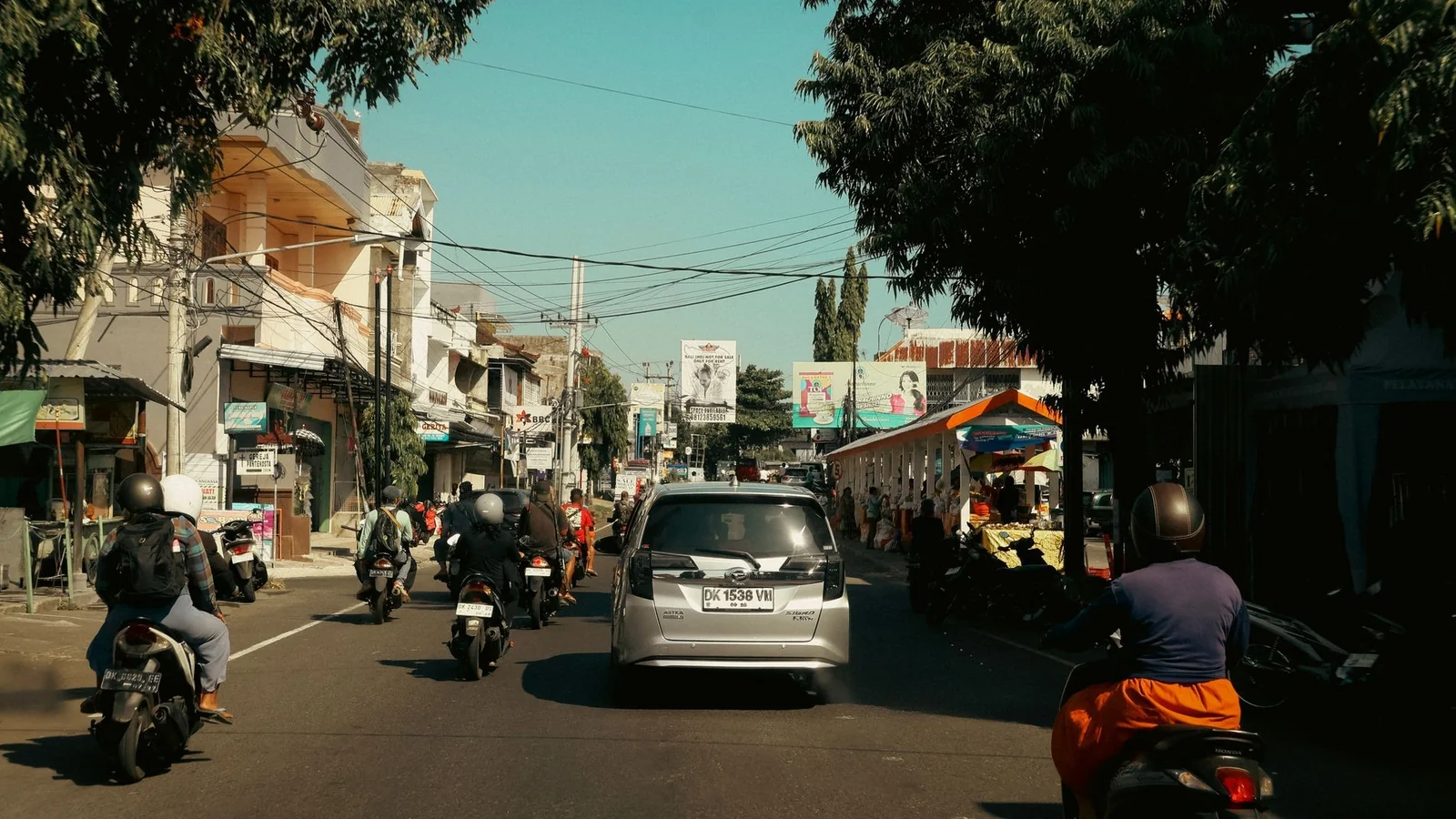
Only rent a scooter in Bali if you are already a confident rider, have valid motorcycle driving permission recognised in Indonesia, and know what your insurance and rental contract will pay for. A shop handing you the keys does not prove you can lawfully ride or that medical bills are covered. Before paying, settle four questions: licence, insurance, the actual bike, and deposit/damage responsibility. If any answer is uncertain, use a car, taxi or experienced driver instead.
That applies just as much to a quiet-looking lane in Ubud as to busy Canggu roads. Bali police have asked rental businesses to check driving licences and warned inexperienced foreign visitors not to ride independently. Booking through a hotel or rental app changes neither your licence category nor your ability.
Which rental decision fits you?
| Situation | Sensible decision |
|---|---|
| You drive cars but have never held a motorcycle licence. | Do not ride a scooter. A car licence does not automatically authorise a small automatic motorbike. Book another vehicle with a driver. |
| You regularly ride motorcycles at home and have a motorcycle-category licence and an International Driving Permit (IDP). | Check that your original licence, correct motorcycle entitlement, IDP type and dates are recognised for your issuing country in Indonesia. Verify with the competent authority and your insurer before renting. An IDP is not a replacement for the underlying licence. |
| You have a valid Indonesian motorcycle SIM. | Match your licence class to the bike's engine size. For a typical small scooter, check SIM C and its validity. |
| You cannot verify your foreign licence or are uncomfortable in unfamiliar traffic. | Do not self-ride. The rental operator's verbal assurance cannot establish legal permission or coverage. |
Indonesian Traffic Police distinguish domestic SIM C (up to 250 cc), SIM CI (over 250–500 cc) and SIM CII (over 500 cc), with issuance ages 17, 18 and 19 respectively. These are Indonesian SIM categories, not proof that every foreign licence or IDP is accepted. For example, UK official guidance describes a UK-specific IDP route; do not apply it blindly to another nationality. When Indonesia's competent authority or your insurer cannot confirm your exact combination, choose not to ride.
Both rider and passenger must wear an SNI-standard helmet. Korlantas confirmed in June 2026 that the requirement derives from Law 22/2009, Articles 57 and 106(8). Ask for properly fitting helmets for everyone. Refuse cracked, loose or unsuitable ones.
“Insurance included” means very little without a policy
Read two separate kinds of coverage. Your travel medical policy must actually cover riding a rented scooter in Indonesia, the engine size, your valid motorcycle licence, any passenger, hospital care and medical evacuation. Ask about the deductible and exclusions before riding. Your rental's vehicle coverage is different: ask for the named insurer or written promise, covered collision damage, theft, damage to other people or property, repair procedure, deductible, and reporting deadline.
A shop might say "insured" but mean only that a limited portion of its own scooter damage is covered. Your hospital bill or third-party claim can remain yours. The UK Government advises checking both the correct licence and travel insurance before vehicle hire in Indonesia. Policies differ: lending the bike to someone else, riding without valid permissions, alcohol or late reporting may affect coverage. These are matters to check, not universal exclusions we can assume.
Worked refusal: The rental clerk cannot show any damage coverage terms and tells you that your own insurer “must pay everything.” Your medical insurer will not confirm motorcycle coverage. Do not accept the keys, even if the daily price is attractive.
Inspect and record the scooter while the operator is there
Ask to see the scooter's STNK registration and check the number plate and basic vehicle details. With the owner or employee present, record a short walk-around video and close-up photos of front and back, left/right panels, mirrors, exhaust, tyres, brake levers, existing scratches, odometer and fuel. Send the video to the rental's business contact while still at the counter, and retain their acknowledgement and timestamp.
Check front and rear brakes, tyres, lights, indicators, horn, stand, keys and helmet fit before any lawful test ride. If there is a dangerous fault, mismatched registration or disputed existing damage, request a different unit or a refund under the agreed terms. Do not assume a test ride is an exception to licence rules.
Imagine returning the scooter after four days: the business says a scratch near the exhaust is new. Your dated handover video shows the same mark at pickup. Compare like-for-like photos and require a written itemised claim rather than accepting a random cash demand.
Price, deposit and damage: get the actual terms in writing
Your written contract or receipt should identify the company, vehicle/plate, pickup and return time, authorised rider, rental price, refundable deposit, fuel level, insurance/deductibles, damage assessment, payment proof and expected deposit-refund method and timing. Clarify lost keys, late returns, punctures and whether a repair estimate or police report is needed.
Illustrative calculation—not a verified Bali market price: If a supplier quotes Rp150,000 a day for four days, rental cost is Rp600,000. If it also holds a separately refundable Rp500,000 deposit, initial cash paid is Rp1,100,000, but net hire cost is Rp600,000 if that deposit is returned in full. Ask which amounts are fees, security holds and possible damage charges; never assume a particular refund window or legal maximum deductible.
Avoid handing over your original passport as an informal security deposit. Seek a documented cash/card alternative; if the operator insists on an unsafe passport-holding arrangement, choose another rental. Keep the agreement, payment receipt and all photos until your deposit is returned.
If you crash, the scooter is stolen or the deposit is withheld
Injuries first: get medical help and protect people from traffic where safe; do not continue riding an unsafe vehicle. Indonesia's police emergency line is 110, which Bali police used for real crash reports and ambulance coordination in 2026. Give the exact location/landmark and follow responders' directions; a private rental deal cannot replace a required police report.
Once safe, photograph the vehicles and plates, road/scene, injuries or damage as appropriate, record time and witnesses, and notify the rental operator and insurer promptly under their real reporting rules. If stolen, report the theft to police, keep the keys and provide the report to both parties. Don't promise payment or admit disputed fault simply because someone asks for cash at the roadside.
Deposit dispute: The owner claims the full deposit for a mirror. Ask for the alleged damage photos, comparison with pickup evidence, contract clause, and written estimate/invoice. Keep communications and a record of the return inspection. Contract terms matter commercially, but cannot override public safety, criminal law or insurance provisions.
Your next decision is simple
Before leaving the shop, you should be able to confirm all four: (1) valid Indonesian-recognised motorcycle entitlement and actual riding ability, (2) appropriately fitting SNI helmets and written medical/damage coverage, (3) a mechanically sound registered scooter with dated handover evidence, (4) a clear price, deposit and liability contract. If one fails, do not ride.
For practical alternatives see Getting Around Bali and Bali Without a Scooter. Bali has no separate island-only driving-licence regime: the national legal entitlement remains the starting point.