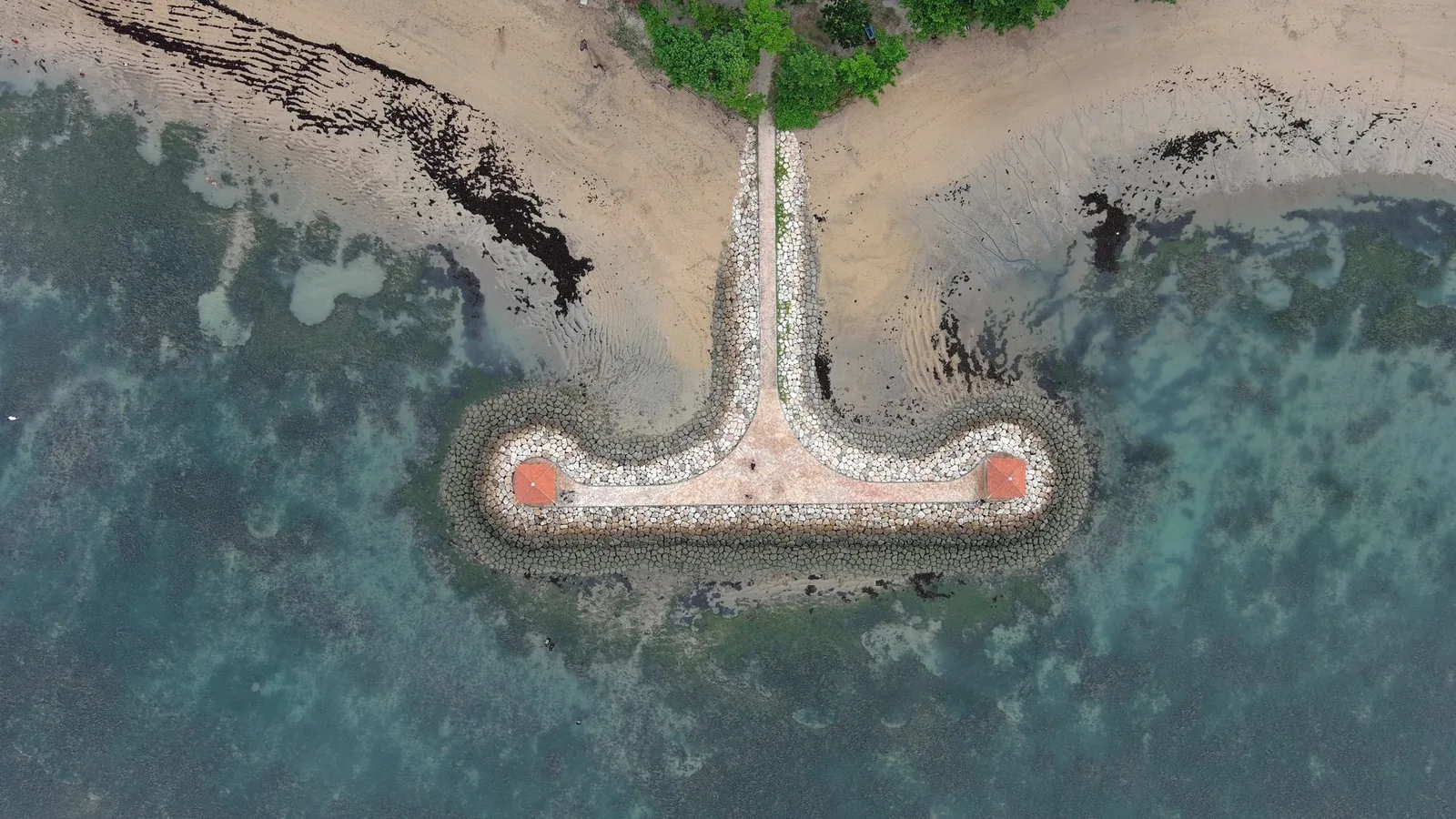
For a family beach day, Sanur or a suitable managed section of Nusa Dua is often a better place to start looking than an exposed surf beach—but no Bali beach is safe for swimming every day. The shore can look gentle in photos while a current, incoming swell, low tide or an unattended stretch makes the water a bad choice. Decide where to spend the day first; decide whether to enter the sea again when you arrive.
If children are your priority, a beach you can enjoy from the sand, with shade and a supervised pool nearby, may be a better holiday than choosing a famous surfing spot and hoping the conditions cooperate.
Match the coast to your actual beach day
| Beach area | Why you might choose it | What to check before swimming |
|---|---|---|
| Sanur — east coast | Offshore reefs create comparatively sheltered shallows in parts of the shore; there is a long seafront walking route, restaurants and places to sit. Useful for a family day near town. | Water can become very shallow over reef at low tide; look out for boat lanes, sharp coral, local restrictions and the actual supervised area. Sheltered does not mean current-free. |
| Nusa Dua / Geger — southeast | Some resort-front and reef-protected sections are comparatively gentle and have convenient facilities. Good candidates for families who want beach access plus an easy pool fallback. | Each bay and resort frontage differs. Check whether a lifeguard is actually on duty, where swimming is allowed, wave sets, rocks/reef, and the tide. A hotel is not proof the public sea is supervised. |
| Kuta / Legian — southwest | Broad sand, sunsets and well-known beginner surf lessons under appropriate instruction. A good place for a walk or to watch surfers. | Breaking surf and rip currents matter. Never enter a red-flagged zone, and do not assume a surf lesson area is appropriate for a toddler to swim. |
| Uluwatu / Padang Padang / Bingin — Bukit west and south | Dramatic cliffs and skilled-surf culture, with reefs and changing breaks. Excellent to watch the ocean. | Some approaches involve steep steps, rocks or caves; reef breaks and stronger waves are unsuitable as a default family swim. A small cove can still have hazardous sets and difficult exits. |
| Jimbaran — southwest bay | A long sand-and-sunset outing with food options; reasonable to consider for shoreline time. | Conditions change along the bay. Ask locally about permitted swimming areas, wave/current warnings and active supervision rather than assuming the entire bay is protected. |
These are typical coastal characteristics, not real-time safety ratings. Indonesia's Tourism Ministry describes Sanur's offshore reef and tides, Nusa Dua's varying managed beach areas and Kuta's surf-versus-swim distinction. It identifies Uluwatu's exposed reef breaks as a surfing draw, not a universal swimming recommendation.
Two actual choices
A family with a preschooler staying in Sanur: Choose a stretch with shade, a nearby toilet and an easy way to leave. Check for active patrols and a permitted swimming area. If the tide is very low, the visible water may be over shallow reef; if there are waves, boat traffic or a red warning, play on shore or use a properly supervised pool instead. The goal is an enjoyable beach visit, not an obligation to enter the sea.
Two adults staying in Canggu who want to surf and swim: Do not use a single booking or a popular beach name as evidence both activities belong in the same patch of water. Find a recognised surf-school meeting point if learning, then separately ask lifeguards which marked zone is suitable for swimming that day. If there is no supervised swimming area, treat the beach as a surf-and-walk visit and swim somewhere else.
Don't turn a wave forecast into a swimming permit
Bali has different exposures: south- and west-facing surf beaches can receive substantial Indian Ocean swell; reef-protected east/southeast sections may be calmer in some conditions. Wind, swell direction, tide and the particular break change the experience across beaches and across hours. A month labelled “dry season” is not a safety certificate. A storm far offshore can still send swell to a sunny beach.
The Indonesian weather agency BMKG publishes Bali maritime high-wave warnings and Denpasar regional weather/wave information. Their forecasts describe broad sea areas and limited validity windows, not a guarantee that a particular stretch of shore is safe for a child. For example, the 28–31 October 2026 BMKG maritime bulletin warned of high waves in waters south of Bali and the southern Lombok Strait. That is a dated example, not advice for a future beach day.
Use those pages on the day of the visit, then check the posted beach flags/signs and an actual on-duty lifeguard or Balawista officer before anyone enters. The Bali provincial coastal safety service explicitly warns that waves, currents and winds can change rapidly, instructs people to stop risky coastal activities when warnings apply and follow on-site officials.
Flags and lifeguards: where does swimming start and stop?
A red flag or a no-swimming sign means stay out of that section. Badung's own Tourism Office records a fatal-risk Kuta incident involving a red-flagged area. Do not read a flag on the next stretch of sand as overriding the warning here.
Some staffed beaches use red-and-yellow flags to mark a supervised swimming zone. Flag schemes can vary and staffing or closure points may change. Do not assume that two coloured flags mean every metre between buildings is safe, or that a beach with no flags has no danger. Ask the actual lifeguard: Where are you supervising today, what is closed, and until what time? If no one is on duty and the current or signs are unclear, stay out of the water.
Surfboard lanes, jet skis, boat approaches and coral shallows are not interchangeable with swimming areas. Keep children within immediate adult reach at the waterline; shallow water and inflatable toys are not substitutes for close supervision.
What if the sea pulls someone away from shore?
A rip current is a narrow, sometimes hard-to-see flow moving away from the beach. It can carry strong swimmers seaward; the current itself does not drag people under, but panic, fatigue and waves make it life-threatening. Official US National Weather Service guidance explains the response:
- In the current: stay as calm as possible and do not exhaust yourself swimming straight against it. If you can swim safely, move parallel to the shoreline until out of its pull, then angle back to shore. If you cannot escape, float or tread water and wave/shout for help.
- On shore: alert the lifeguard and emergency services, identify the beach and nearest access landmark, and throw a flotation aid if you can do so without entering the water. Do not send an untrained family member into the current; rescuers can become victims.
- After rescue: if anyone is unresponsive, struggling to breathe or may have inhaled water, obtain urgent medical help immediately and follow emergency personnel's instructions.
These steps are emergency responses, not reasons to enter dangerous surf. Learning swimming basics in a pool cannot replace surf experience or on-site assessment.
A beach day can be good even when nobody swims
For young children, people who cannot swim or travellers with limited mobility, choose the day based on sand access, shade, toilets, lifeguard presence, nearby food, and an easy taxi pickup before checking photos of the sea. Sanur's beachfront promenade can be an alternative when the water is unsuitable. Nusa Dua's resort sections may offer a pool option, but check actual guest access and whether the pool has supervision too.
If the forecast or flags turn against your plan, do not drive around chasing a supposedly “safe beach.” Keep the beach walk, lunch or sunset, and move swimming to another day or an appropriately supervised pool. For boat trips to Nusa Penida or Lombok, the separate island boats and flight-buffer guide covers marine travel disruption; a boat's sailing decision is not a guarantee for shore swimming.
Before leaving the hotel: check the latest BMKG forecast, choose a beach for its facilities and type of day, and keep an alternative. At the beach: ask where the supervised swim zone is, follow today's flags and walk away if the conditions do not match your group's ability.